Research has shown that CoolSculpting is an effective procedure to eliminate excess fat thanks to its noninvasive technique that freezes subcutaneous fat. Since it is noninvasive, meaning no incisions necessary, it has added benefits and reduced risks when compared to more traditional fat-removal procedures.
CoolSculpting saw a massive boom in popularity as a fat-loss procedure when it was approved by the US Food and Drug Administration (FDA) back in 2010. Since gaining approval, the method skyrocketed in popularity.
How Does The CoolSculpting Procedure Work?
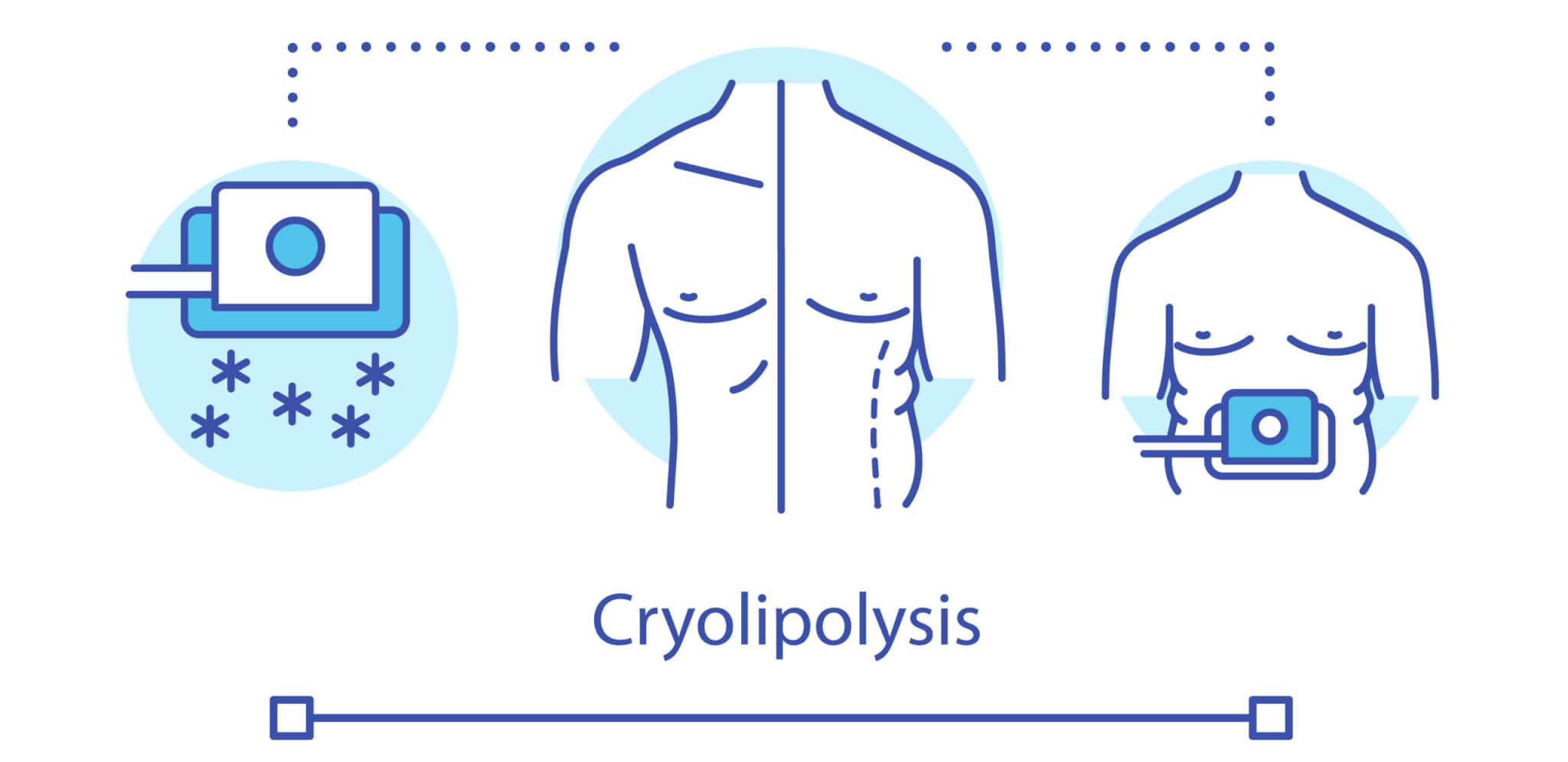
CoolSculpting uses a technology known as cryolipolysis, which posits that cold temperatures can be employed to target fat cells safely and effectively without harming the skin. The process applies targeted amounts of controlled cooling with a tool called an applicator, which uses a vacuum to draw the “roll” or chunk of fat in between two cold pads. The treated fat cells become crystallized and eventually die off, leaving the body naturally over a period of weeks. This process is comparable to frostbite, but in this case, the suctioning and closely monitored temperatures allow your tissues to remain unaffected.
In addition to crystallizing fat cells, cryolipolysis treatments cause inflammation to occur in the treated area as a result of tissues becoming exposed to cold temperatures, as well as the vigorous suctioning of skin. The combined effect of freezing and inflammation provides for the permanent damaging of fat cells beyond repair.
Once the CoolSculpting session has come to a close, your body will naturally begin to break down the frozen fat cells. As your body repairs itself, it will consume these cells as energy and disposed of. Cryolipolysis does not shrink fat cells but instead eliminates 20 to 25 percent of the cells in the treated area. Because the number of fat cells in the body is finite, this provides for the reduced size and more contoured appearance of the targeted body part.
Each CoolSculpting session takes approximately an hour, but you can get several areas treated at the same time, assuming your doctor has the appropriate applicators. Significant body parts such as the abs and love handles may require more sessions than let’s say the arms. Several factors come into play in determining the number of sessions, like the amount of fat that needs to be removed and the patient’s time availability.