

Botox and fillers may be relatively newer procedures that improve the skin’s appearance and feel. Still, chemical peels have withstood the test of time and remain the preferred method used by many doctors to this day.
Applied by a cosmetic expert to the neck, face, or hand, these chemical solutions cause the surface of the treated body part to exfoliate and eventually peel off. Once the excess skin is entirely removed, the new layer develops, giving the skin a smooth, less wrinkled appearance.
What Can Chemical Peels Do?
Most people assume chemical peels have limited functions, but in reality, they can solve or treat several issues, including:
- Sun damage-induced wrinkles and scars
- Lines around the mouth and under the eyes
- Specific types of face acne
- Freckles, dark skin patches, and age spots that result from pregnancy or birth control pills
One thing to consider as you enjoy your smoother, more vibrant “new skin” is that it might be temporarily more sensitive to the daylight and intense sun. Doctors will recommend sunscreen above SPF 30, and moisturizing cream to address the concerns.
How Are Chemical Peels Applied?
This kind of procedure is usually performed in a doctor’s office or a surgical center. The treatment is an outpatient process, which means the patient does not stay overnight.
The professional performing the peeling will first clean the patient’s skin thoroughly, and then apply the specific chemical solutions. Sometimes, more than one can be used.
The cream will create a controlled wound, which allows the old skin to form with time.
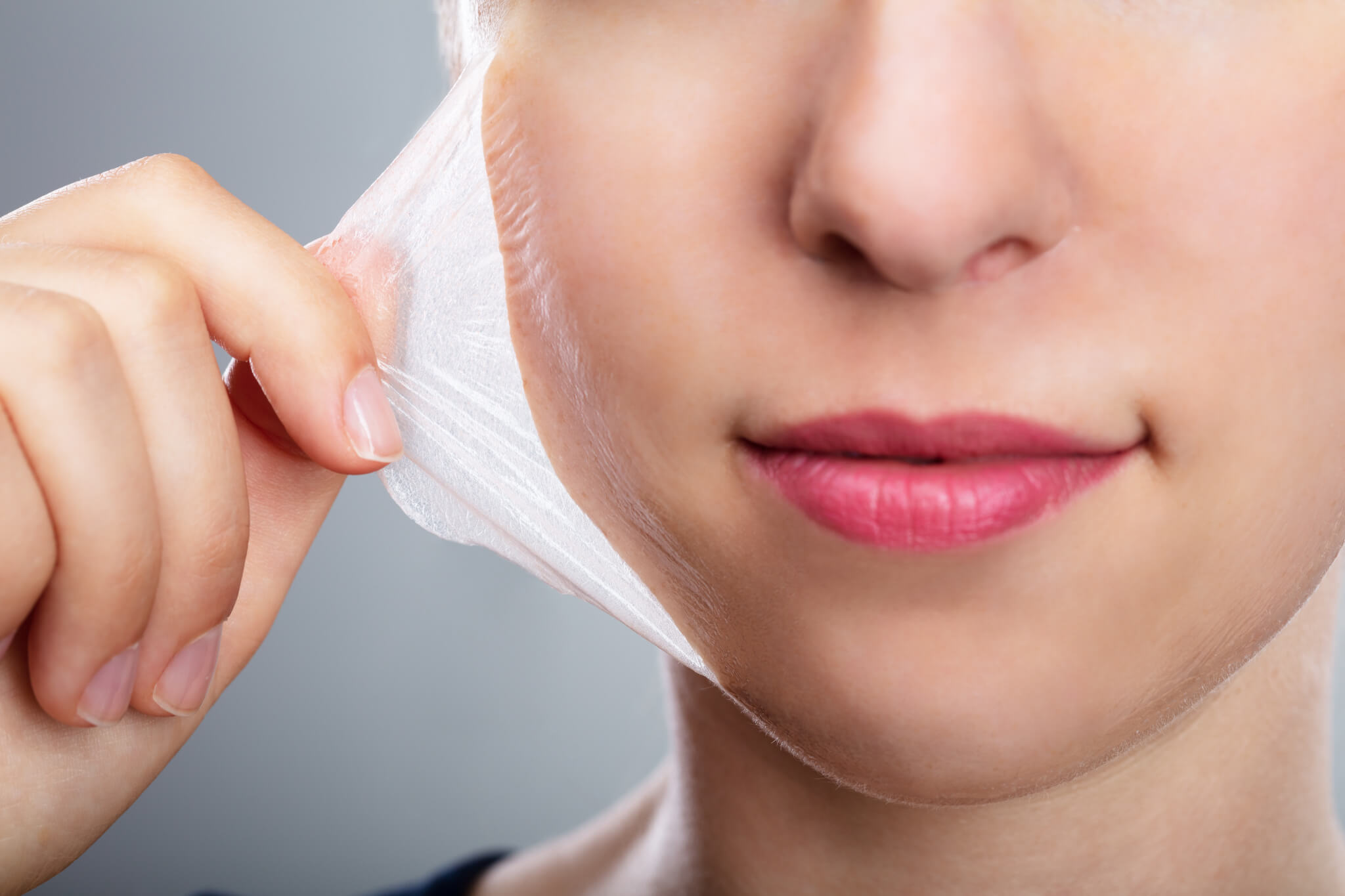
During and after the Chemical Peel:
Most people feel a burning sensation that can last from ten to fifteen minutes during a chemical peel. A stinging sensation might follow the minor burning. Your doctor may ease the discomfort with ice compresses applied directly to the wound or around it.
After the treatment, you might need pain medication to calm the burning sensation, which should dissipate the same day of the procedure without too much discomfort. Redness and minor swelling should also be expected around and near the treated areas.
Mild peels may be repeated during a follow-up session as soon as one month after the procedure, depending on your expected results and skin type. Medium or deep-depth peeling may result in blisters, crusting, or scabbing that should fall off over a five to ten-day period.
Bandages may be needed to help secure the treated skin.
Are There Any Side Effects or Complications?
As with any other cosmetic procedure, side effects or complications might appear. Minor scarring, temporary skin color changes, and small blisters or cold sores could appear.
Always check in with your doctor regularly about the condition of your skin and your goals for treatment. This way, you can both establish the proper post-chemical peel treatment to avoid side effects and enjoy effective results.